Catering is often one of the largest expenses for events, whether it’s a wedding, corporate gathering, or private party. Many event organizers assume that budget constraints automatically mean compromising on quality, but this isn’t true. With careful planning, creative menu design, and efficient service strategies, it’s possible to deliver memorable experiences without overspending.
Budget-friendly catering isn’t just about cheap ingredients—it’s about maximizing value, reducing waste, and using innovative techniques to impress guests. From creative menu engineering to smart logistics, a well-managed budget can result in events that are both economical and exceptional.
In this article, we’ll explore strategies, case studies, and practical tips to achieve catering excellence without breaking the bank.
1. Strategic Menu Planning
The foundation of cost-effective catering is smart menu planning. The goal is to maximize taste and presentation while minimizing cost.
1.1 Focus on Seasonal & Local Ingredients
- Using seasonal produce ensures freshness at a lower cost.
- Local sourcing reduces transportation costs and supports sustainability.
- Example: A Dubai wedding menu featuring dates, local vegetables, and seasonal fruits can offer unique flavors without premium import prices.
1.2 Opt for Versatile Ingredients
- Choose ingredients that can be used in multiple dishes to reduce waste.
- Example: Chicken can appear in salads, entrees, and finger foods, making bulk purchasing cost-effective.
1.3 Mix Gourmet & Affordable Items
- Balance premium items with budget-friendly options.
- Example: Pair a signature seafood appetizer with more economical vegetarian dishes.
1.4 Portion Control & Presentation
- Carefully calculated portion sizes reduce waste while keeping guests satisfied.
- Elegant presentation tricks, like garnishes and plating, make dishes appear luxurious without expensive ingredients.
2. Buffet vs Plated Service
Choosing the right service style significantly impacts cost.
2.1 Buffet Style
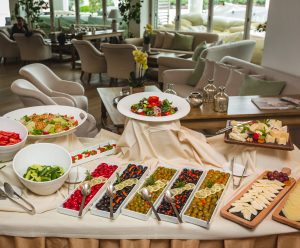
- Cost-efficient for large groups as guests self-serve.
- Reduces the need for extensive waitstaff.
- Encourages variety with fewer items per dish.
2.2 Plated Service
- Offers a formal, upscale feel but requires more staff and preparation.
- Can be made budget-friendly by offering limited entrée choices and smaller portions.
2.3 Hybrid Solutions
- Combine buffet starters with plated mains or desserts for an elegant yet economical solution.
- Example: Corporate events often use buffet lunches with a few plated signature items to balance costs and presentation.
3. Leveraging Creative Presentation
Visual appeal can make affordable dishes feel premium.
- Use colorful garnishes, edible flowers, and herbs for sophistication.
- Stylish plating techniques elevate the perceived value of each dish.
- Serve food in mini portions or tapas-style, creating the illusion of variety while controlling costs.
Example: At budget-friendly weddings, mini desserts and canapé platters can wow guests without adding significant expense.
4. Streamlining Staffing
Labor costs can be a major expense in catering. Reducing staff without affecting service quality is essential.
- Use buffet setups to reduce the number of servers.
- Cross-train staff to handle multiple roles, from food service to table clearing.
- Automate beverage stations with self-service bars for drinks like water, juice, or tea.
Case Study: In corporate events across Abu Dhabi, catering companies deploy smart staffing ratios for efficient service during peak hours while maintaining guest satisfaction.
5. Smart Beverage Management
Drinks often contribute significantly to catering costs.
5.1 Offer Limited Signature Options
- Instead of full open bars, provide 2–3 signature cocktails, soft drinks, and water.
- Guests still feel catered to, but costs are controlled.
5.2 Bulk Beverage Purchase
- Purchasing drinks in bulk reduces per-unit costs.
- Example: Serving iced tea, lemonade, or mocktails in dispensers for large events reduces both cost and staff requirements.
5.3 Alcohol Management
- Optional alcohol packages reduce unnecessary expenditure.
- Encourage BYOB (Bring Your Own Bottle) for small gatherings when appropriate.
6. DIY & Interactive Stations
Interactive food stations can reduce labor costs while enhancing the guest experience:
- DIY Salad or Taco Stations: Guests build their own dishes, reducing need for plated service.
- Live Cooking Stations: Chefs prepare a few dishes on-site, while the rest of the menu is pre-prepared.
- Dessert Buffets: Mini desserts in trays or jars are cost-effective yet visually appealing.
Tip: Even simple stations create an impression of luxury without premium expense.
7. Negotiating with Vendors & Suppliers
Building strong relationships with suppliers can significantly reduce food costs:
- Purchase in bulk where possible.
- Negotiate seasonal or leftover produce deals.
- Partner with local farms and vendors for cost savings and fresh ingredients.
Example: Catering services in Dubai often partner with farmers for bulk vegetables and seasonal fruits, reducing costs while supporting local agriculture.
8. Minimizing Waste
Food waste is a hidden cost in catering. Smart planning minimizes waste and saves money:
- Pre-event RSVP tracking ensures accurate guest counts.
- Portion control, as mentioned earlier, prevents excess servings.
- Reusable serving ware reduces disposable item costs.
- Leftover strategies: donate excess food, reuse ingredients creatively, or repurpose in smaller dishes.
9. Focus on Quality, Not Quantity
- Offering fewer high-quality items is more impressive than overwhelming guests with many mediocre options.
- Small, well-prepared dishes enhance the perception of luxury.
- Example: Serve a few elegant appetizers with perfectly cooked main dishes rather than dozens of buffet items that dilute quality.
10. Incorporating Technology
Technology reduces operational costs and enhances efficiency:
- Event Management Software: Track RSVPs, menu selections, and staffing needs.
- Online Ordering & Payment Systems: Reduce administrative overhead.
- Digital Menus & QR Codes: Save printing costs and allow real-time menu updates.
Case Study: Several UAE-based catering services now use apps to coordinate large-scale corporate events, cutting staff and planning errors, while maintaining guest satisfaction.
11. Creative Decorations & Setup
Decor does not have to be expensive to be memorable:
- Use theme-based props, fairy lights, and flowers for ambiance.
- Reuse décor items creatively across events.
- DIY signage and table arrangements add personal touch at low cost.
Tip: Even budget weddings can look luxurious with coordinated color palettes and smart lighting.
12. Catering Packages & Pricing Models
Offering flexible packages helps clients stay on budget:
- Tiered packages: Bronze, Silver, Gold with increasing options.
- Per-person pricing avoids surprises and simplifies planning.
- Optional add-ons allow clients to upgrade based on preference.
Example: Corporate lunch packages often include appetizers, main course, and drinks at fixed pricing—allowing planners to predict costs precisely.
13. DIY Elements for Cost Savings
- Encourage clients to provide some items themselves, like desserts or specialty drinks.
- Incorporate family-style serving or potluck-style options for casual events.
- Educate clients about budget-conscious alternatives that do not compromise experience.
14. Training Staff for Efficiency
Efficient staff can reduce costs and elevate guest experience:
- Cross-trained teams handle multiple roles.
- Staff focus on guest engagement instead of repetitive tasks.
- Experienced staff reduce errors, improving cost-effectiveness and consistency.
15. Highlighting Value Through Presentation
- Even budget-friendly ingredients can feel premium with stylish platters and creative serving trays.
- Food styling, color contrast, and garnishing can transform simple dishes into visually appealing creations.
Example: Mini sliders, finger sandwiches, and bite-sized desserts on elegant trays create a luxurious feel at low cost.
16. Leveraging Partnerships
Partnering with local businesses or suppliers can reduce costs:
- Florists, event planners, and décor companies often bundle services for discounted rates.
- Collaborate with beverage or equipment providers to negotiate bulk pricing.
17. Creative Dessert & Beverage Solutions
- DIY dessert bars, cake pops, or jar desserts are cost-effective yet impressive.
- Signature mocktails or infused water dispensers add elegance without high cost.
- Dessert and beverage stations double as décor elements, reducing need for extra styling.
18. Marketing & Branding Through Catering
Even budget catering can create lasting impressions:
- Logo-branded napkins or dessert tags enhance client perception.
- Social media sharing of visually appealing setups creates marketing opportunities.
- Word-of-mouth recommendations stem from well-executed, memorable service.
19. Case Studies: Budget-Friendly Catering Success
- Corporate Gala in Abu Dhabi: Buffet-style with interactive pasta station, signature drinks, and minimal staffing. Result: 200 guests satisfied at 25% lower cost than traditional plated service.
- Wedding in Dubai: Seasonal menu, local produce, mini desserts, DIY mocktail bar. Guests praised taste and presentation while the client remained within budget.
- Private Party: Finger foods, live taco station, and LED décor for a luxurious look on a small budget.
These examples show that creativity, planning, and efficiency can achieve high-quality catering without overspending.
20. Conclusion: Affordable Excellence in Catering
Budget-friendly catering is not about cutting corners—it’s about strategic planning, creativity, and smart execution. By focusing on seasonal ingredients, thoughtful menu planning, efficient staffing, and stylish presentation, caterers can deliver memorable experiences at a fraction of the cost.
The key lies in maximizing perceived value while minimizing unnecessary expenses. Even on a tight budget, an event can impress guests, leave lasting memories, and create opportunities for repeat business.
In 2024, catering services that balance cost, creativity, and quality will continue to dominate the events industry, proving that unforgettable experiences don’t have to be expensive.